Eastern Washington Gets More Summer Sun Than You Think
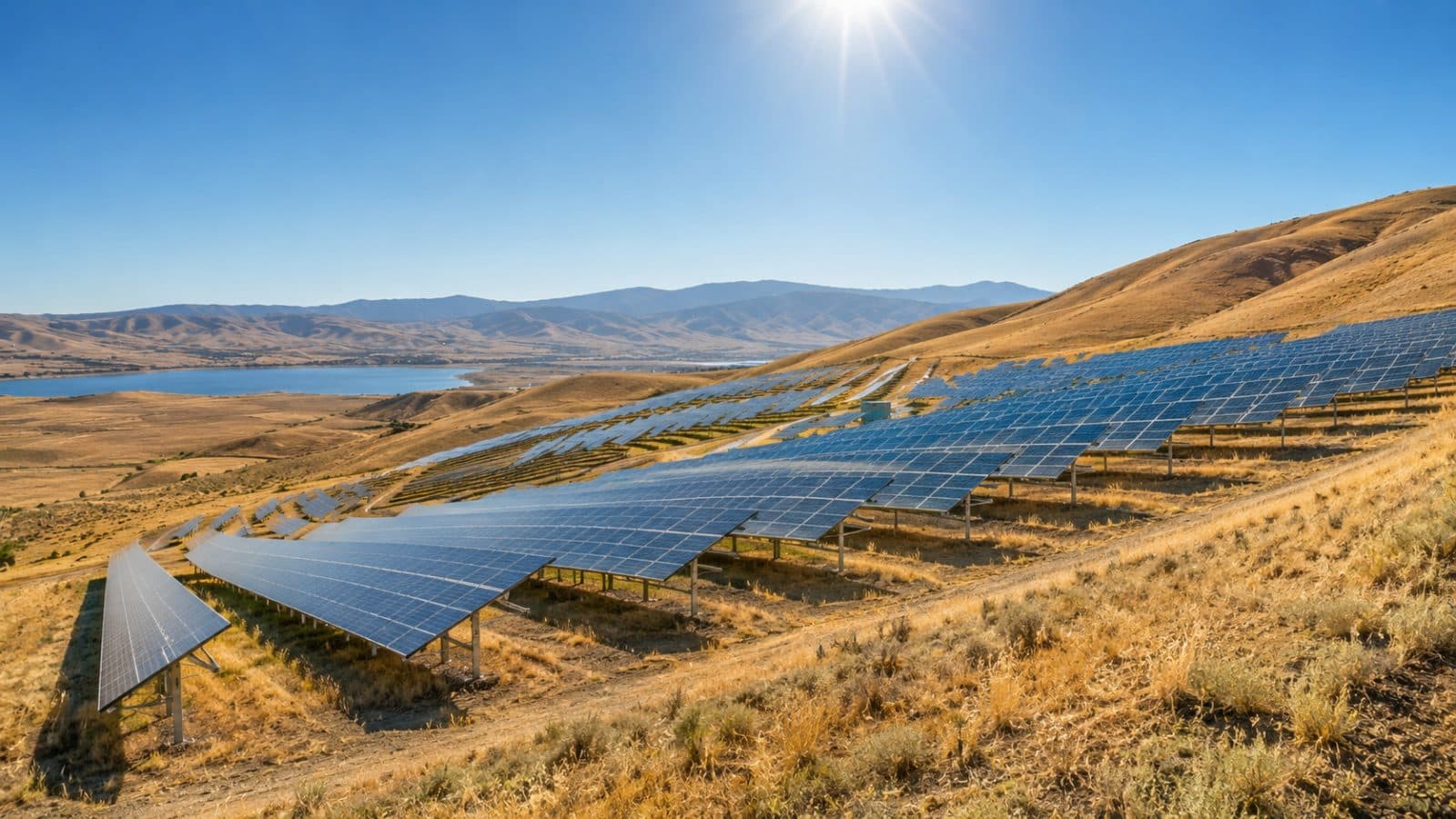
Eastern Washington Gets More Summer Sun Than You Think
Okanogan County logs 300+ sunny days a year — more peak sun hours than most of California. Here's what that means for your solar output.
---
The Setup
Most people assume solar makes sense in Arizona or Southern California. Eastern Washington doesn't come up. That's a mistake.
The numbers tell a different story. Oroville, Washington averages 5.5 to 6.5 peak sun hours per day in summer — higher than Los Angeles for several months of the year. The east side of the Cascades is dry, high, and cloudless in a way that the coast never is.
If you're running a property in Okanogan County, Ferry County, or anywhere in the Columbia Basin, you're sitting on a solar resource that most people underestimate.
---
Peak Sun Hours: What They Actually Mean
"Peak sun hours" isn't about how many hours the sun is above the horizon. It's the number of hours per day that solar irradiance averages 1,000 watts per square meter — the standard rating condition for panels.
One peak sun hour = 1 kWh of energy per rated kilowatt of panels.
So a 10-panel system at 400W each (4kW total) in a location with 5.5 peak sun hours produces:
4 kW × 5.5 hours = 22 kWh per day
Run that through a full summer month: 22 kWh × 30 days = 660 kWh. At Avista's residential rate of around $0.10–$0.12/kWh, that's $66–$79 in monthly offset from a 10-panel system. (For context, the U.S. average residential rate is closer to $0.16/kWh per the EIA — eastern WA power is cheap, which actually lengthens grid payback but makes off-grid independence the bigger draw.)
Want to check the exact numbers for your address? Plug your location into NREL's free PVWatts Calculator — it pulls real local solar-resource data and models hour-by-hour output for a full year.
---
How Eastern WA Compares
Here's how Okanogan County stacks up against other solar markets by average annual peak sun hours per day:
- Oroville, WA: 5.1 annual average (6.5+ in summer)
- Seattle, WA: 3.8 annual average
- Los Angeles, CA: 5.6 annual average
- Phoenix, AZ: 6.5 annual average
- Denver, CO: 5.5 annual average
- Charge a battery bank for overnight use
- Run a well pump without a generator
- Offset grid bills substantially if you're still connected
- Power an off-grid cabin completely through summer
Eastern Washington is in the same tier as Denver and within range of Los Angeles. Most people have no idea. Seattle drags Washington's reputation down — but Seattle is not where you're building your off-grid system.
---
Winter Is Real — Plan for It
Summer peak sun hours are impressive. Winter is a different story.
December and January in Okanogan County average 2.0–2.5 peak sun hours per day. That's less than half of summer output. If you're sizing a year-round off-grid system, you need to design for the worst case, not the average. Our step-by-step off-grid sizing guide walks through exactly how to do that.
The practical implication: a system that covers your loads in summer needs roughly 2.5x more battery capacity to handle cloudy winter weeks, or you need a backup generator for January and February.
For seasonal cabins, vacation properties, or supplemental grid-tied systems, winter matters less. If you're trying to go fully off-grid year-round at a primary residence, factor it in.
---
What 300 Sunny Days Actually Buys You
Even accounting for winter, the summer surplus in eastern Washington is real and worth capturing.
From May through September, a 10-panel system (4kW) producing 20+ kWh per day generates more power than most households use. That excess can:
The eastern WA climate is genuinely one of the better solar environments in the country. The Cascade rain shadow does its job.
---
The Bottom Line
The sun data on eastern Washington is better than its reputation. If you're on the east side of the Cascades — in Okanogan, Douglas, Chelan, Ferry, or Stevens County — you're in a region where solar pencils out clearly. The question isn't whether the sun shows up. It does. The question is whether your system is sized right to use it.
Start with real local sun hour data, then figure out how many panels you actually need. When you're ready, our used 310W and 315W panels are an affordable way to put all that sunshine to work — stop by the depot in Oroville or browse the current stock.
Ready to get your panels?
We have stock on hand in Oroville, WA. Local pickup, honest prices.
Shop Solar PanelsGet notified when new stock arrives
No spam. Just stock alerts and occasional sale notices.