
Can You Mix Solar Panels of Different Wattages?
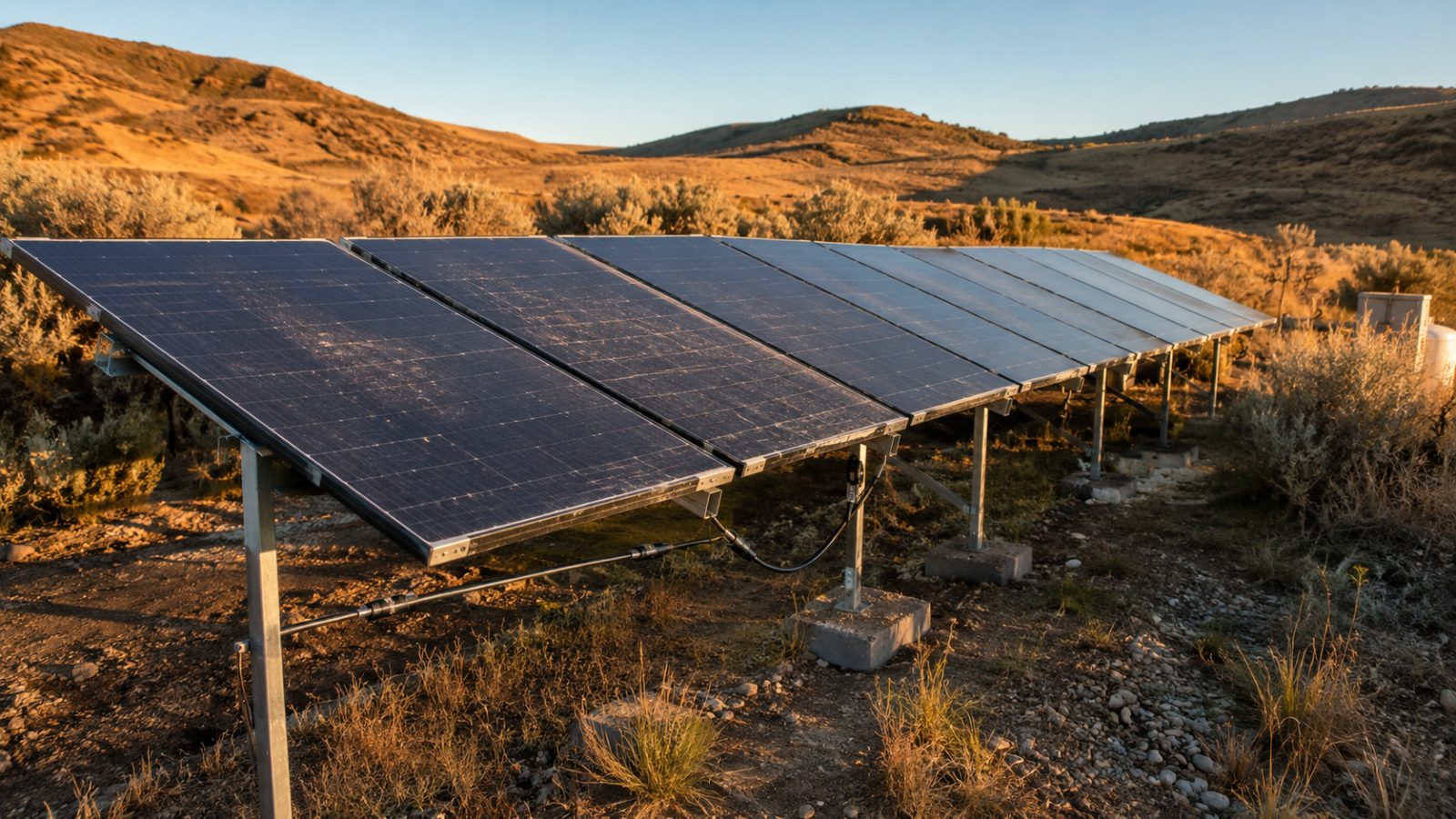
It's one of the most common questions we get at the counter: "I've got a few 305-watt panels and a couple of 315s — can I just wire them all together?" The short answer is yes, especially when the wattages are close. But it's worth understanding what actually happens when you string mismatched panels together, because there's a right way and a wrong way to do it.
We're going to keep this plain. No engineering degree required.
The one rule that matters: the weakest panel sets the pace
When you wire panels together into a "string," they stop behaving like individuals and start behaving like a team — and the team can only move as fast as its slowest member. Mismatch a panel and you don't break anything; you just leave a little bit of free electricity on the table. How much depends on how you wire them and how different the panels are.
Series vs. parallel, in plain English
There are two basic ways to connect panels, and they behave differently when the panels don't match:
| Wiring | What adds up | What the mismatch costs you |
|---|---|---|
| Series (panels chained end to end) | Voltages add up; current stays the same | The whole string runs at the lowest-current panel. Mixing different amperages is what hurts here. |
| Parallel (all positives together, all negatives together) | Currents add up; voltage stays the same | The group is pulled toward the lowest-voltage panel. Mixing different voltages is what hurts here. |
So the rule of thumb is simple: in series, match the current (amps); in parallel, match the voltage. That's the whole game.
Why matching is best practice
If every panel in a string is identical, nothing gets left behind — every panel pulls its full weight, your wiring is simpler, and your charge controller has an easier time finding the sweet spot. When you're buying a fresh batch for one array, matching is the easy call and it's what we'd tell our own family to do.
Why mixing close wattages is usually no big deal
Here's the part most people get wrong: they hear "matching is best" and assume mismatching is a disaster. It isn't — as long as the panels are close. The loss is tied to how far apart the panels' current and voltage numbers are, not the wattage number printed on the label.
Take our own JA Solar lineup. These are all the same JAP6-72 family, just binned at slightly different outputs:
| Panel | Voltage at max power (Vmp) | Current at max power (Imp) |
|---|---|---|
| JA Solar 305W | 36.71 V | 8.31 A |
| JA Solar 310W | 37.05 V | 8.36 A |
| JA Solar 315W | 37.40 V | 8.42 A |
Look at the current column: 8.31, 8.36, 8.42 amps. The spread from the weakest to the strongest is about 1%. Wire those in a series string and the "penalty" for mixing them is a rounding error — you'd never notice it on your meter. Mixing panels this close together is completely fine, and we sell them knowing plenty of folks will run them side by side.
That's the honest takeaway: matching is ideal, but mixing panels that are within a few watts of each other costs you almost nothing.
When mismatching actually bites
The trouble starts when the panels are genuinely different animals:
- Big wattage gaps — pairing a little 100W panel in series with a 300W panel drags the big one down to the little one's current. That's real, wasted power.
- Different cell counts / voltage classes — a 60-cell panel and a 72-cell panel have meaningfully different voltages. Don't string those together; give each type its own run.
- Different brands or models — even at the same wattage, the underlying voltage and current can differ. Our ReneSola 300W panels, for example, are a different module than the JA Solar family and carry a lower 600 V maximum system voltage — so we'd keep them in their own string rather than mixing them into a JA Solar run.
- Group like with like. If you've got a mix, build each string out of the most similar panels you have.
- Series = match amps. Parallel = match volts. Tape that to the wall.
- Use an MPPT charge controller. It constantly hunts for the best operating point and quietly recovers a lot of what a cheap PWM controller would waste.
- Keep mismatches small. A few watts apart? Don't lose sleep. A few hundred watts apart? Split them up.
- Model it if you're unsure. NREL's free PVWatts calculator lets you estimate real-world output for your setup before you commit.
Practical rules of thumb
If you want help thinking through how your panels should be wired for your loads, our guide on sizing an off-grid system for the Pacific Northwest walks through the whole chain, and how many panels you actually need is a good starting point. And if you're still fuzzy on what amps and volts even mean, start with our plain-English primer on watts, amps, and volts.
Got a pile of mismatched panels and not sure how to wire them? Give us a call at (509) 341-0559 — we're happy to talk it through. And if you're building a fresh array, our JA Solar 305/310/315W panels are close enough to mix and match freely.
Ready to get your panels?
We have stock on hand in Oroville, WA. Local pickup, honest prices.
Shop Solar PanelsGet notified when new stock arrives
No spam. Just stock alerts and occasional sale notices.